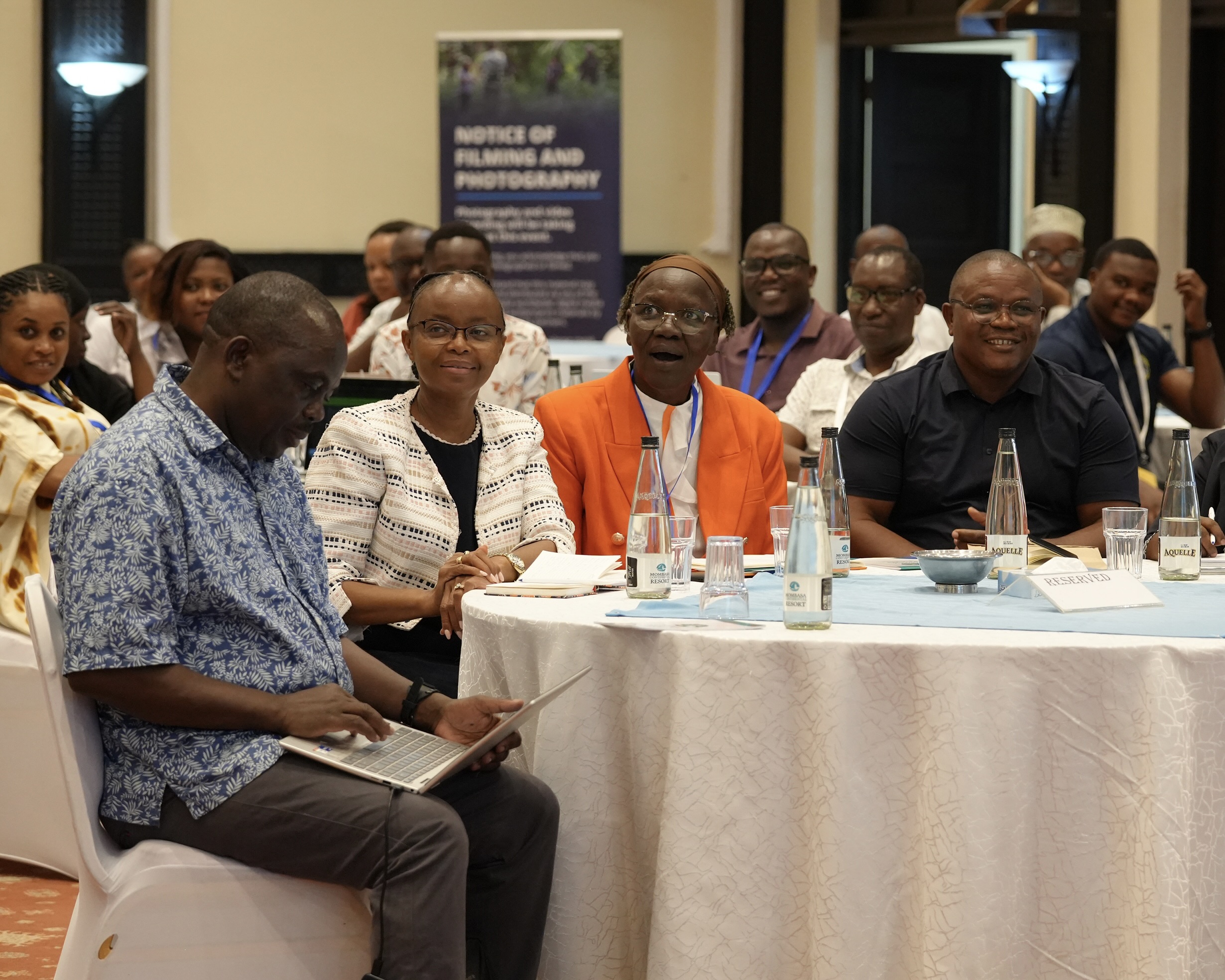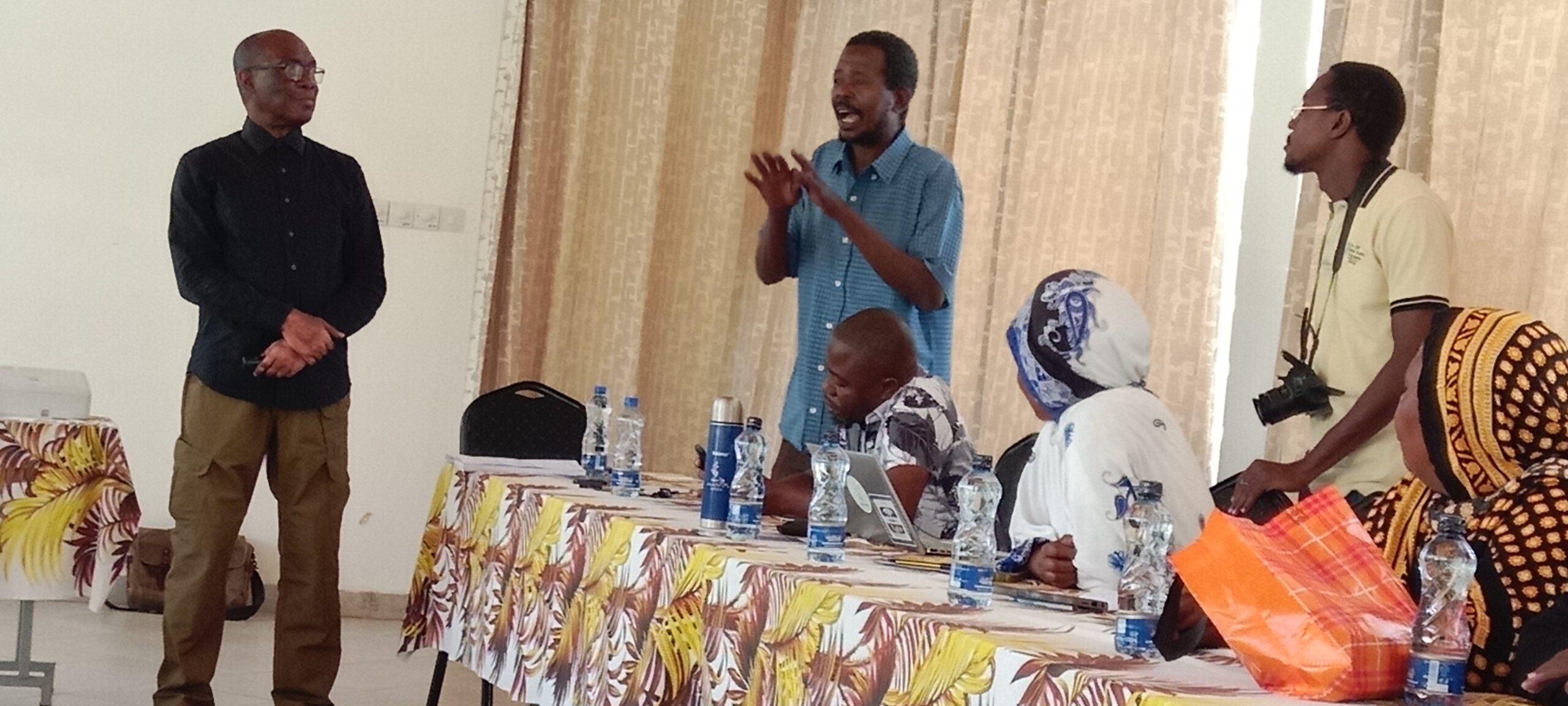
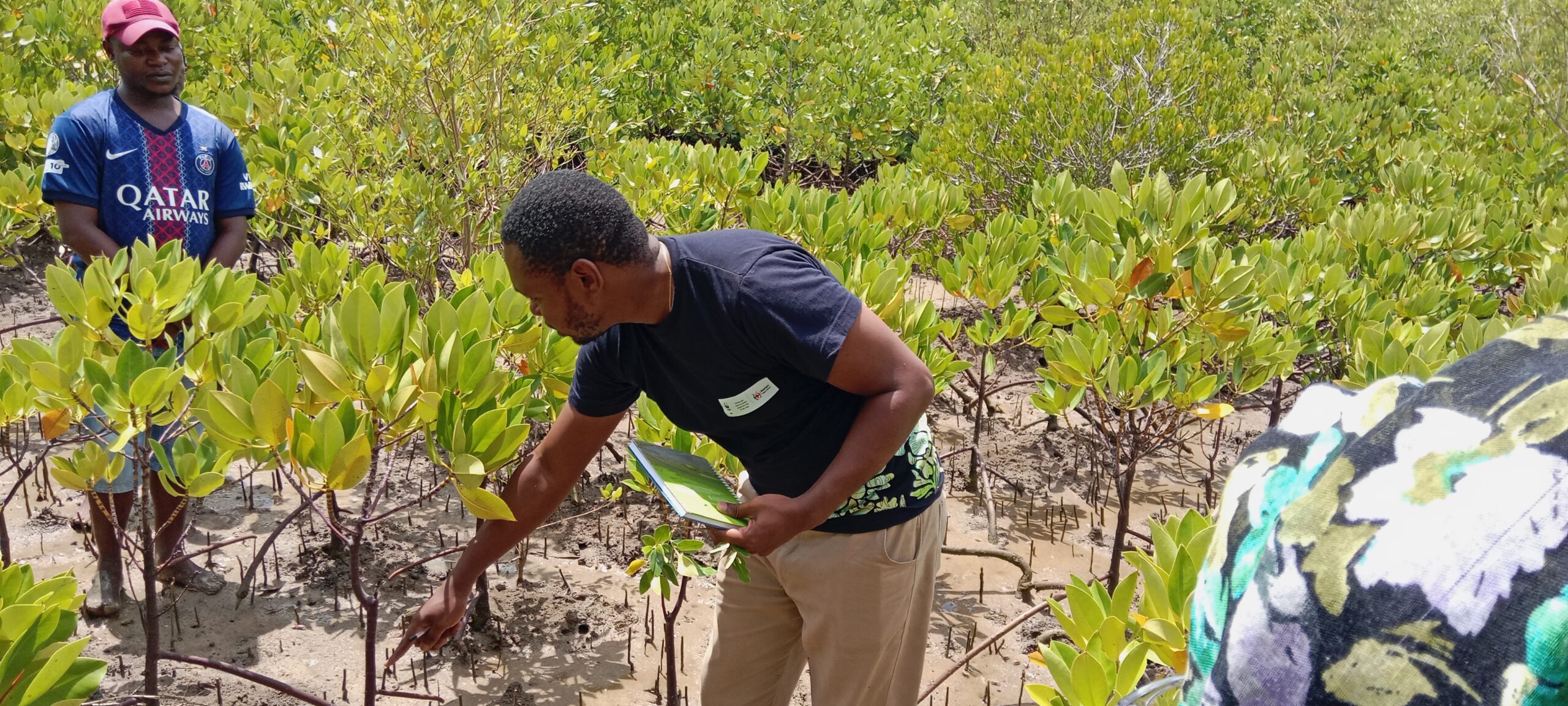
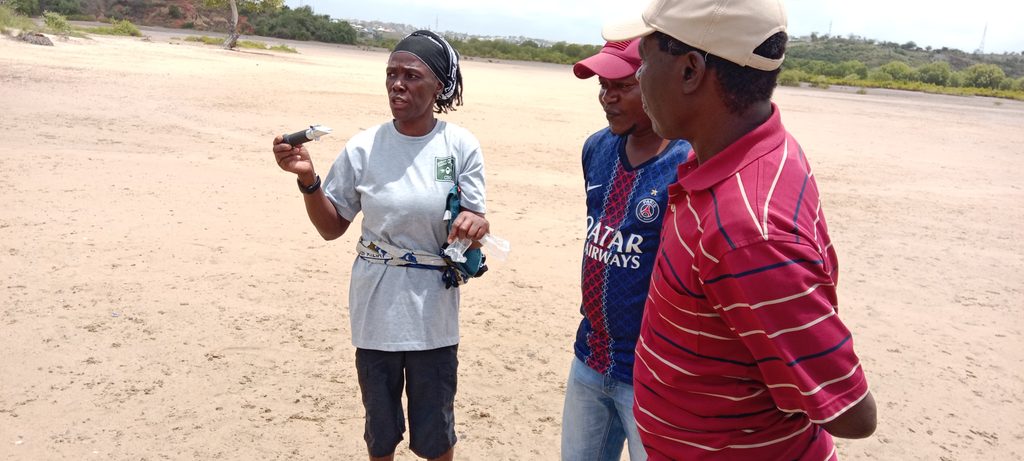
Scientist Emmanuel Karisa from Kenya Forest Service taking CBEMR training participants through different approaches to mangrove restoration in Jomvu, Mombasa County| Photo By Mazera Ndurya
Three months after a much- publicized record-breaking mangrove planting exercise in Kwa Jomvu, Mombasa, questions are being raised about whether planting trees is the same as restoring a mangrove ecosystem.
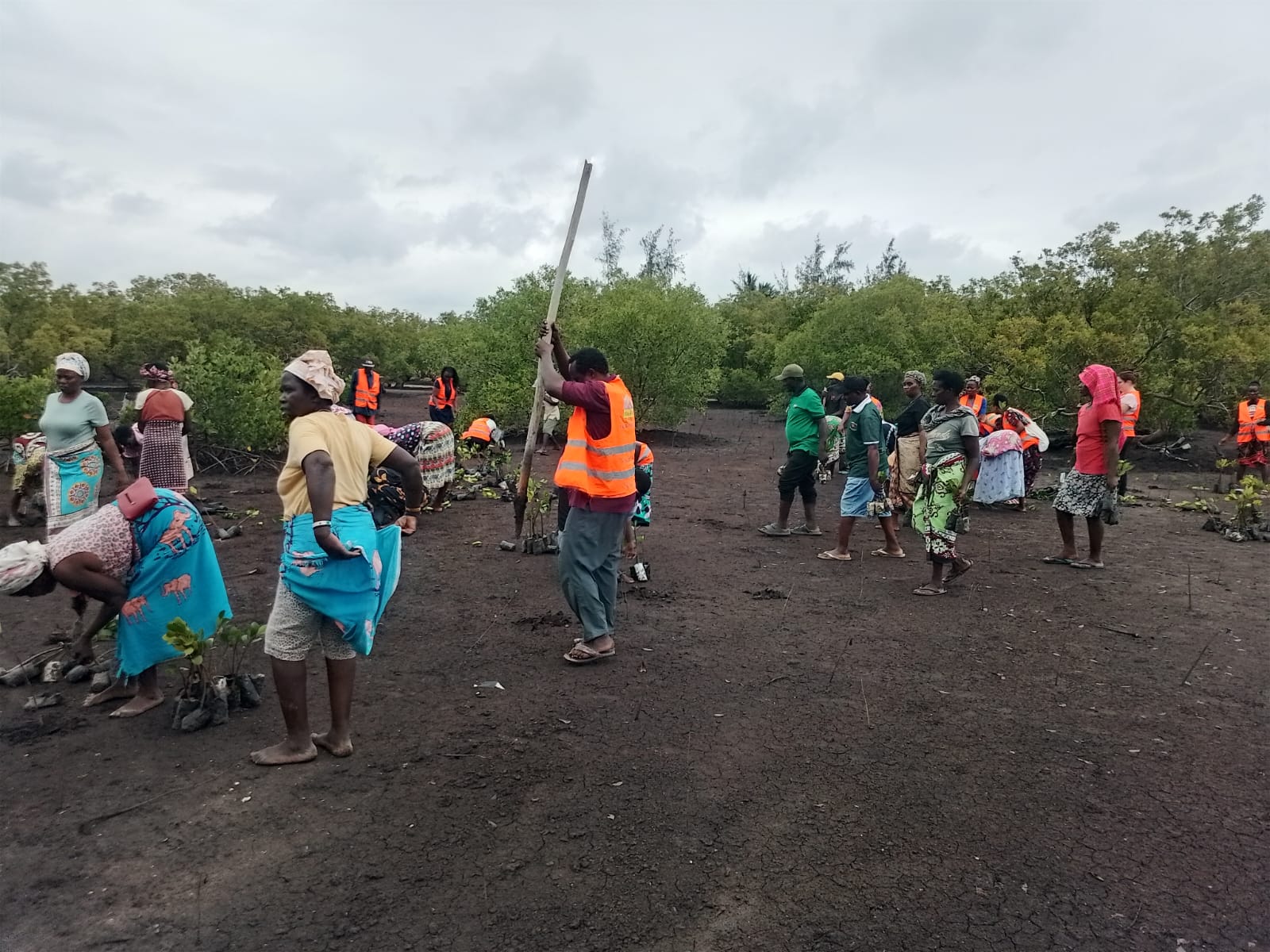
In June 2026, thousands of people gathered at Jomvu Kuu in Mombasa County in an ambitious attempt to make history through mangrove conservation.
The Kenya Scouts Association later announced that 4,124 participants had planted mangrove seedlings simultaneously during World Mangrove Day celebrations, in what was presented as a Guinness World Records achievement.
But barely three months later, have concerns emerged over the survival of the seedlings.
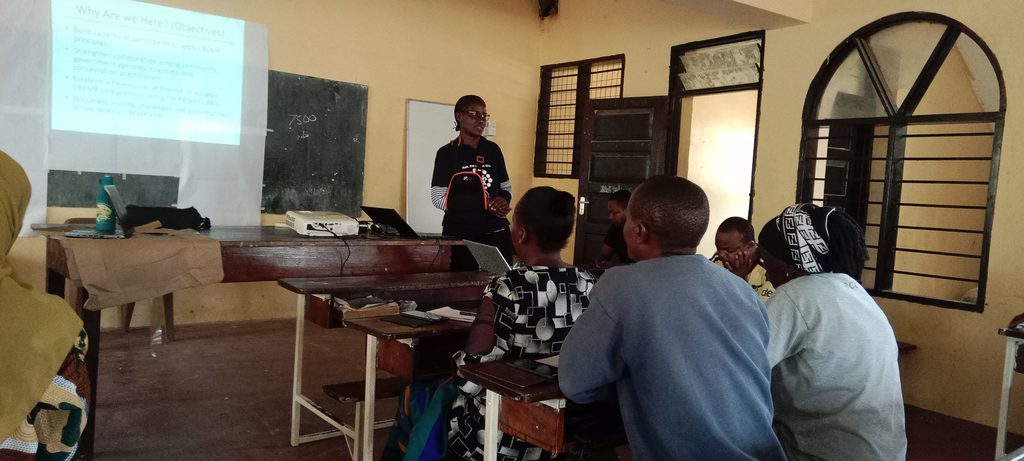
At a Community-Based Ecological Mangrove Restoration (CBEMR) training held at Jomvu Kuu, about two kilometres from the Kwa Fara site where the record attempt took place, community conservationists, scientists and civil society organisations examined what may have gone wrong.
Their message was striking: planting mangroves is not necessarily mangrove restoration.
The problem may begin before the first seedling is planted
For years, mangrove restoration has often been associated with collecting propagules or raising seedlings and putting them into the ground.
According to Maresi Ibrahim, Project Assistant for Coast and Deltas at Wetlands International Eastern Africa, CBEMR approach begins by asking why mangroves are not regenerating naturally.
“The approach promotes natural regeneration rather than planting,” he explained.
Under CBEMR, practitioners first examine the conditions of a site, including its history, hydrology, tidal patterns, sediment movement and soil characteristics.
Sometimes the problem is not a shortage of seedlings.
“It may be that water can no longer move through the forest as it once did. Channels may have been blocked by sediment or other forms of debris. Tidal flows may have changed. Human activities may continue to place pressure on the ecosystem.
“In such cases, planting seedlings without fixing the underlying problem can amount to putting mangrove trees into an environment where they cannot survive,” said Maresi.
Global Mangrove Alliance (GMA) guidance similarly recommends identifying the barriers to natural regeneration before intervening. Where those barriers can be removed, natural regeneration may be the most sustainable restoration option.
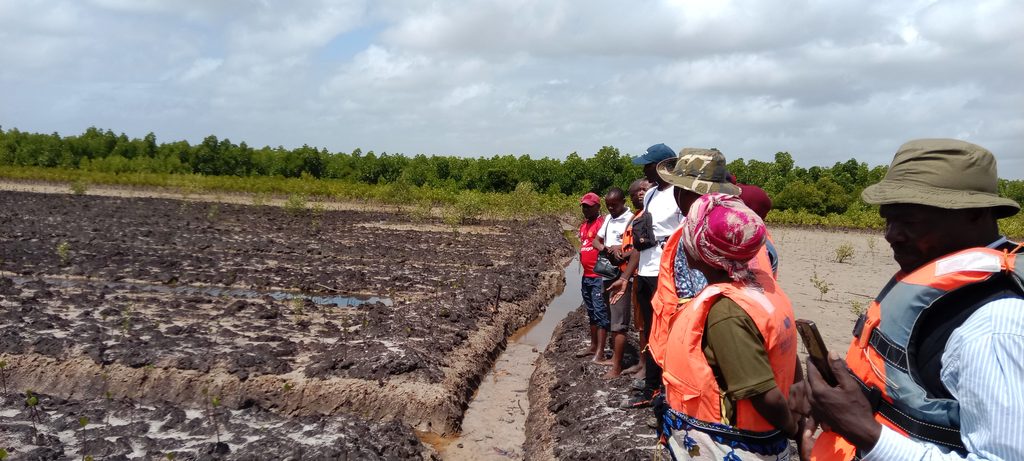
The CBEMR approach does not reject planting altogether but this is generally considered a last resort or supplementary intervention, after the conditions necessary for natural regeneration have been assessed and, where possible, restored.
Maresi gave the example of Muhogoni site located at Mkunumbi in Lamu County where for years, the community had attempted to restore degraded mangrove areas through planting, but the efforts repeatedly failed.
“After receiving CBEMR training and conducting a site assessment, community members identified a different problem: hydrology.
“Sediment carried by surface runoff had blocked channels, interfering with water movement through the mangrove ecosystem,” he said.
The community mobilised itself to reopen the channels and with the hydrological system restored, mangroves subsequently began regenerating naturally.
“A similar approach in Kitangani, Mokowe has also reportedly resulted in signs of natural regeneration. The experience illustrates an important distinction: sometimes the best way to restore a forest is not to plant more trees, but to restore the conditions that allow the forest to grow by itself,” said Maresi.
Wetlands International says its Kenyan CBEMR work in Lamu focuses on natural regeneration by improving hydrology, sediment and nutrient conditions while involving communities in site identification, restoration and monitoring.
For Dr Judith Okello of the Kenya Marine and Fisheries Research Institute (KMFRI), one of the biggest problems with mass planting campaigns is that they can reduce a complex ecosystem to a simple tree-growing exercise.
“Mangroves are not just trees,” she argues. “It’s an ecosystem.”
A functioning mangrove supports fish, crustaceans, birds, microorganisms and other organisms associated with the forest and its sediments.
She added: “Restoration therefore means recreating the ecological conditions that allow the wider system to recover and not simply increasing the number of trees in the ground.”
Participants at the Jomvu Kuu training pointed to several possible explanations for the poor survival of the seedlings planted during the mass exercise.
One was site suitability.
Mary Ngumbao, a mangrove conservationist with Bidii Creek Conservation Group, said the community believed the planting for the Guinness World Record had taken place in an inappropriate area.
She also raised concerns about inadequate involvement of local conservation groups.
According to Ngumbao, her group was involved mainly in distributing seedlings, while Scouts and schoolchildren carried out the planting.
She said the exercise did not sufficiently draw on local knowledge about appropriate species, planting locations and conditions.
“It’s not just anywhere that you plant,” she said, explaining that mangrove species are associated with particular zones and conditions.
She added that soil salinity, the presence of mother trees, hydrology and the timing of planting all need to be considered.
These observations are consistent with international CBEMR guidance, which stresses that restoration sites must be selected according to their ecological and socio-economic characteristics rather than treated as interchangeable planting grounds.
Dr Okello questioned the logic of mass planting exercises where success is measured primarily by the number of trees planted.
According to her, not every degraded area is suitable for immediate planting.
Once mangroves are removed, she explained, ecological processes can change. The longer degradation persists, the more difficult restoration can become.
That means restoration may require dealing with the root cause of degradation before finally deciding to plant.
She also questioned whether scientific expertise had been adequately incorporated into the Jomvu Kuu world-record attempt.
Researchers, she argued, could have helped determine whether the selected site was appropriate for planting and what intervention was required.
The experience of local communities demonstrates why their participation matters.
Ngumbao began working on mangrove restoration in 2018 through Bidii Creek Conservation Group.
At the time, she said, large areas around Kwa Fara and Mawemawe had been cleared.
The group began collecting propagules and planting them without formal training.
They later established nurseries and, from 2021, began receiving support from organisations and companies that purchased seedlings and supported planting activities.
The group has since seen forest cover return to areas that were previously bare.
But Ngumbao also acknowledges that some of their early efforts failed.
They used plastic containers for raising seedlings and did not know which soil conditions were suitable. They often could not explain why seedlings died after planting.
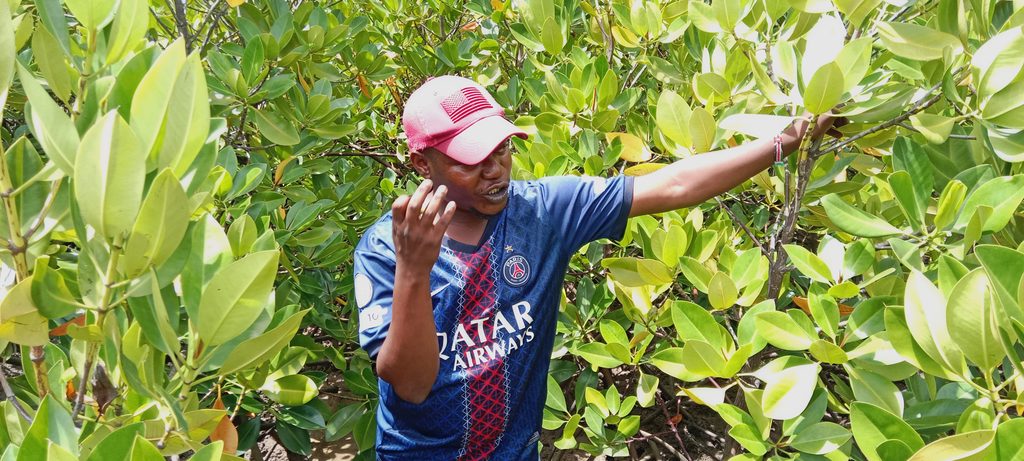
The CBEMR training has given the community a different way of looking at restoration.
Traditional knowledge meets science
For Wilfred Ndune of Mwachideco CBO, the connection between mangroves and livelihoods was understood long before scientific terminology entered the conversation.
A fisherman, Ndune remembers the impact of the 1997 El Niño rains and subsequent degradation of mangrove areas.
He said roughly 60 percent of the mangrove cover in his area was affected and fishing subsequently suffered.
Before the degradation, he recalled, a fishing trip could yield up to 30 kilogrammes of fish. After the decline, catches could fall to one or two kilogrammes.
The community understood mangroves as breeding and nursery grounds for marine life.
Heavy siltation was also observed to contribute to mangrove deaths.
By 2015, the community began actively restoring mangroves, initially with support and guidance from the Kenya Forest Service.
Eventually, they established mangrove nurseries and developed alternative livelihoods, including beekeeping.
For Ndune, CBEMR does not completely replace what the community has been doing.
Rather, it adds scientific tools to traditional observation.
The community had been identifying mangrove species from existing trees and stumps and using that knowledge to guide restoration.
The training is helping them understand why some of those efforts worked while others did not.
One of the strongest messages emerging from CBEMR is that ecological restoration cannot be separated from people’s economic realities.
Maresi says restoration efforts must be connected to sustainable livelihoods.
If communities depend on mangroves for income, food or other resources, conservation cannot simply ask them to stop using the forest without addressing their economic needs.
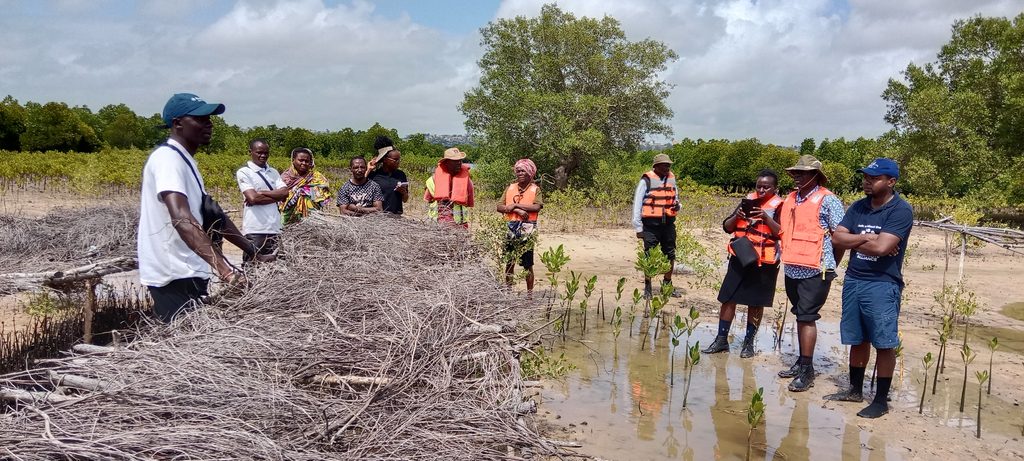
“In some cases, the same people involved in conservation may also be contributing to degradation because they depend on the ecosystem for survival.
“That is why CBEMR places communities at the centre of planning, restoration and monitoring,” Maresi said.
There is also an important distinction between restoration and natural regeneration.
Ndune estimates that areas targeted for recovery in his community are now about 65 percent covered.
He believes active restoration can bring a forest back faster, but only if it is done correctly.