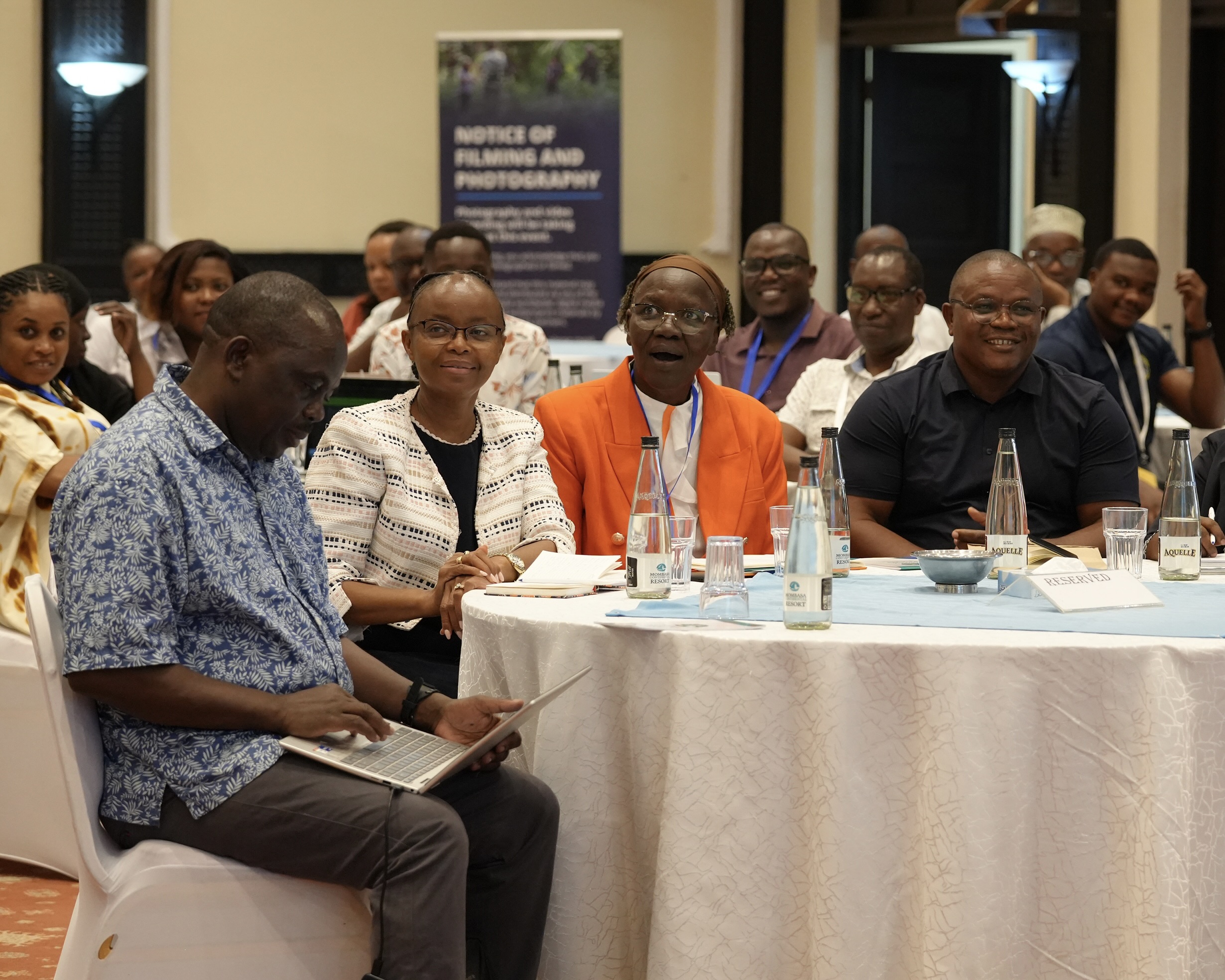
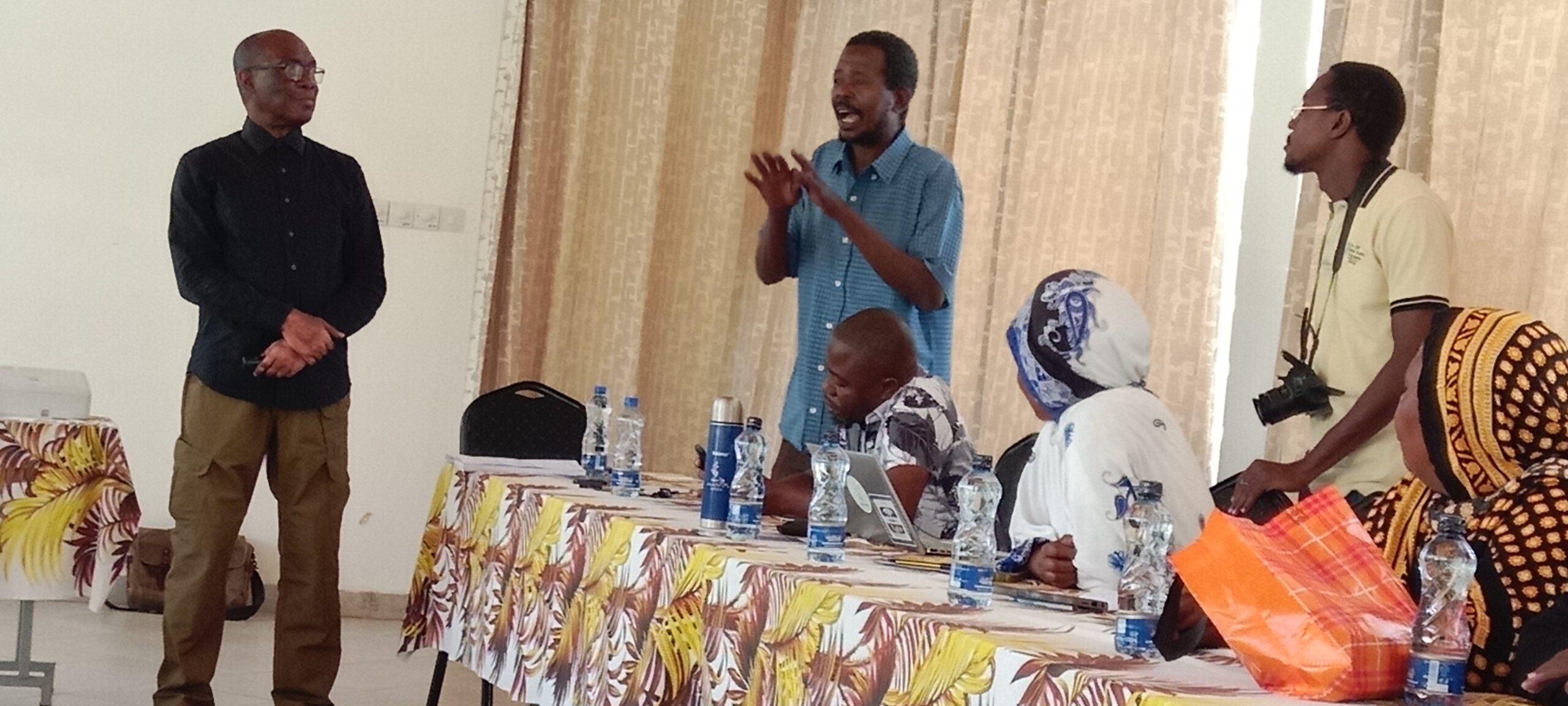
Hadley Becha, CANCO Executive Director, listening to a reaction from one of the participants at the Advocacy and Governance Training in Msambweni, Kwale County | Photo By Mazera Ndurya
At the crack of dawn Biasha Omar is already up and running preparing to set off for Mkunguni beach, a place where she ekes her living as a fish monger.
She is one of the many women who have found work either selling food to fishers who come from the waters every day or those who buy fish to sell in Msambweni and other surrounding villages.
Biasha belongs to the coastal communities in Kwale County in the Kenyan Coast, who for generations have depended on the ocean for their livelihood. However, as pressure on marine and coastal resources grows, the source of livelihood is increasingly under threat.
The pressure is now extending to the management of other marine ecosystems such as mangroves and corals. Beach Management Units (BMUs) are staring at uncertain future as landing sites have become targets for land grabbers.
According to the Kwale County Beach Management Units (BMU) Network –KCBN, out of the 24 BMUs in the county only two – Mwaepe and Chale have secured their areas through acquisition of title deeds.
KCBN Chairperson Omar Mtengo said they are trying to make follow ups with the Kenya Fisheries Service (KeFS) and the Kwale County Government to ensure that the landing sites that have been adjudicated get titles.
“KeFS has earmarked several landing sites in Kwale County for adjudication as the process to get title deeds gets underway. This is something that we are following up with both the national government through KeFS and the County Government through the Fisheries Department to ensure that landing sites are fully in the hands of communities through BMUs,” said Mtengo.
Sadat Ali, KCBN Secretary said the situation is worrying when fishers who have inherited landing sites and even beach access roads have to operate under fear of being evicted.
“KCBN is working with other stakeholders, including NGOs and government agencies responsible for fisheries and land, to address the issue that is the biggest threat to fisheries,” said Ali.

Another avenue to seek redress is steadily taking shape. Communities in the region are increasingly turning to advocacy and environmental governance to protect the resources on which their lives depend.
From fish landing sites without title deeds to illegal fishing, shrinking access to mangrove forests and seagrass meadows, the communities say they are facing challenges that cannot be addressed through conservation alone.
They need to understand the law, know their rights and responsibilities, and engage government agencies and other stakeholders through the right channels.
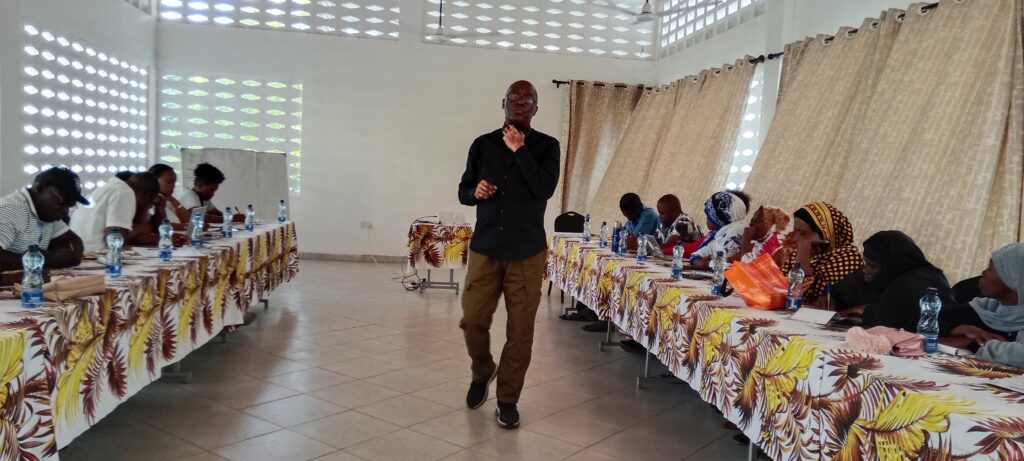
This was one of the key messages emerging from a two-day advocacy and governance training involving community-based organizations, Beach Management Units (BMUs) and civil society organizations working in the Bodo-Mwandamu and Shimoni-Vanga areas under projects supported through the Global Environment Facility Small Grants Programme (GEF SGP) implemented by UNDP.
According to Hadley Becha, Executive Director of the Community Action for Nature Conservation (CANCO), which provides strategic support to GEF SGP UNDP grantees, communities cannot effectively advocate for their rights without first understanding the laws and regulations governing natural resources.
He said environmental governance in fisheries, forestry and biodiversity requires communities to understand both their rights and the responsibilities of different government agencies.
The need for such knowledge has become increasingly urgent in the area where communities say decisions affecting their traditional sources of livelihood are being made without adequate consultation.
The battle over fish landing sites
One of the most pressing concerns is the lack of secure land tenure for fish landing sites.
Becha observed that although some landing sites have been gazetted, most do not have title deeds. This, he said, has created uncertainty and opened the sites to competing claims and private development.
Landing sites are the foundation of the local fishing economy, providing space for boats to land, fish to be sold and processed, and fish traders many of them women to earn a living.
At Mkunguni, the problem has become particularly contentious and as Biasha said part of their landing site has been claimed by private developers. The community has yet to see the title deed for the land.
Who owns the mangroves?
While communities struggle to secure their landing sites, another concern is emerging around access to mangrove forests.
Becha questioned the growing use of the “Adopt a Forest” approach, arguing that it could undermine communities that have been involved in managing and conserving forests for decades.
He said organisations from outside the communities are seeking long-term arrangements over large areas of mangrove forests, raising questions about the future role of Community Forest Associations (CFAs) that have participated in forest management.
The concern extends to emerging blue carbon initiatives, which seek to generate financial value from the carbon stored in ecosystems such as mangroves and seagrass meadows.
The question, Becha argued, is straightforward: “if mangrove forests and other coastal ecosystems are placed under private control, where will the communities that depend on them go?”
The issue has already caused friction between government programmes and local communities.
Fighting illegal fishing through the law
Illegal and destructive fishing is another challenge threatening marine resources.
Ramadhan Abdalla, Project Manager for the GEF SGP UNDP programme at Mkunguni, said the BMU has been working to stop illegal fishing but often encounters resistance from fishers from other areas who use prohibited or harmful fishing methods.
“Our patrol teams sometimes face open defiance when they attempt to enforce regulations.
“The advocacy and governance training, however, has helped us understand that enforcement must be anchored in law,” he said.
Communities’ voice in decisions
For the communities, advocacy is also about ensuring that government projects respond to local realities.
Abdalla cited the procurement of boats for fishers as an example of what can happen when communities are not adequately consulted. Some vessels provided to fishers, he said, did not adequately serve their needs.
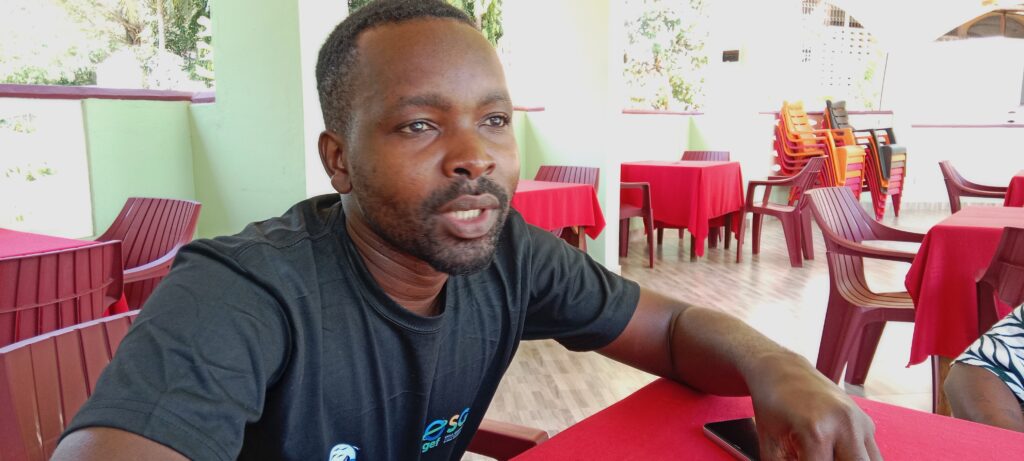
“The training emphasized the importance of identifying the correct “pathway” for raising a particular problem by knowing which institution has the authority to address it and how to present the issue,” said Abdalla adding that this was one of the most important lessons from the training.
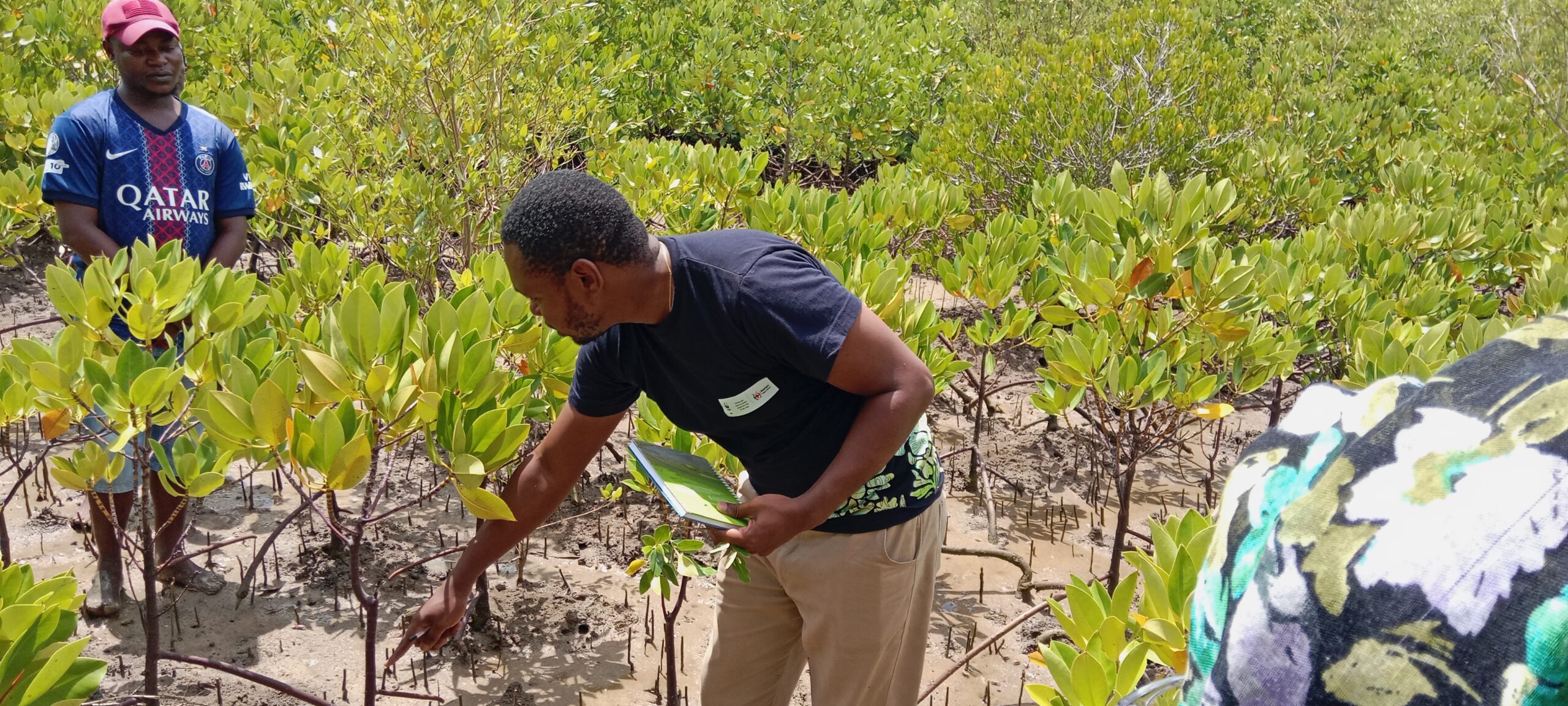
In Jimbo, a community project is supporting the conservation of seagrass and coral ecosystems through a Local Managed Marine Area, or tengefu. A section of the area is closed to fishing for 10 months and opened for controlled fishing for two months, with specific bylaws governing the fishing gear that can be used.
Before reopening the closure, BMUs collect data on the condition of seagrass, fish stocks and other biodiversity to determine whether the conservation measures are producing results.
The initiative is also exploring the potential of blue carbon, with the aim of generating carbon finance that can benefit local communities.
According to Mohamed Bakari, Project Manager of the Jimbo GEF SGP UNDP project, community members must understand what conservation projects are intended to achieve.
“Alternative livelihoods are part of the strategy. Beekeeping in mangrove forests is being promoted, while the area’s sardine (dagaa) value chain is being strengthened through improved quality, hygiene and processing to reach markets beyond the Kenyan coast.
Women and youth at the centre
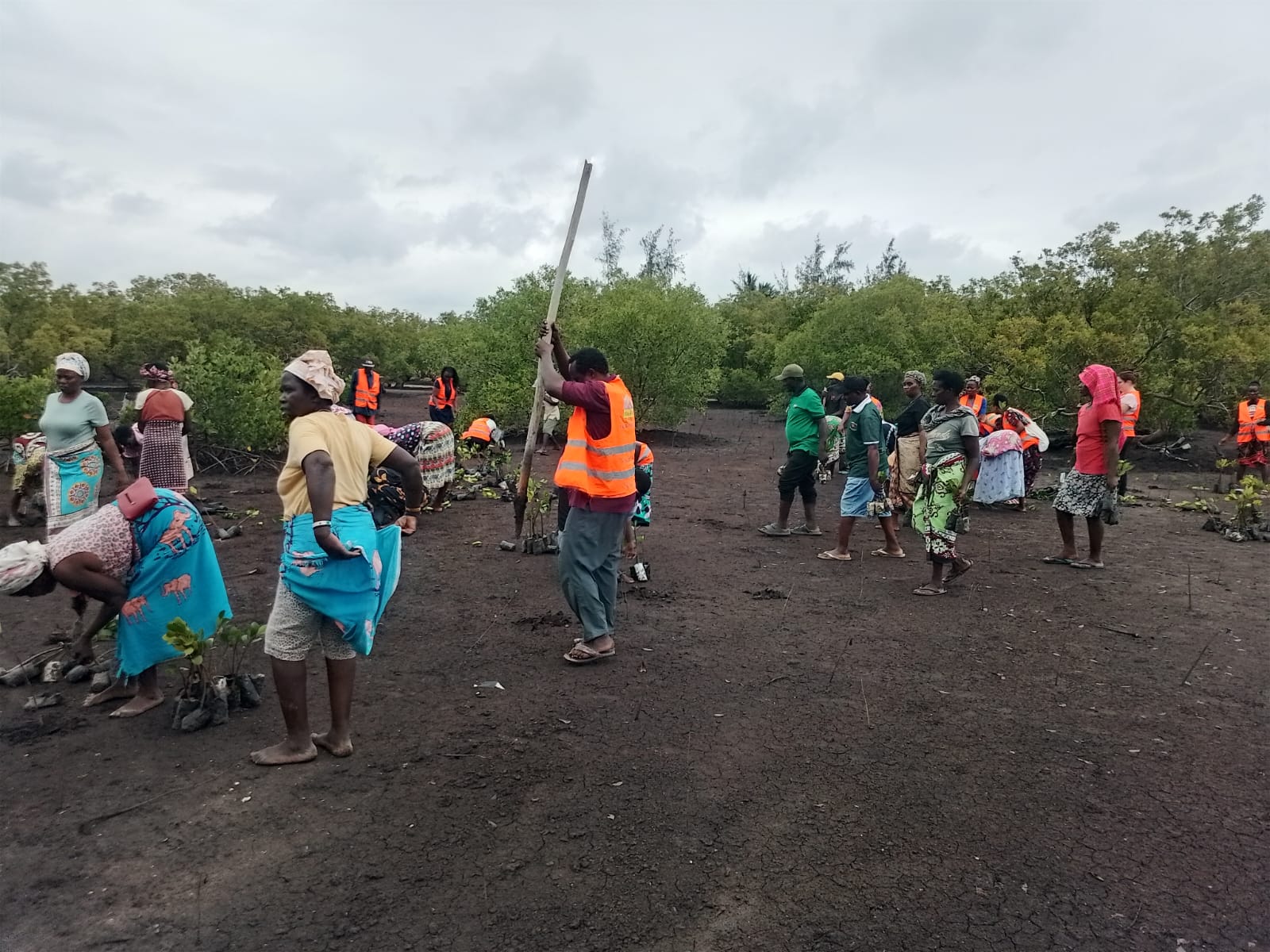
Women are playing an increasingly visible role in marine resource governance.
Biasha said women fish mongers at Mkunguni depend heavily on fishers because they generally do not own fishing vessels.
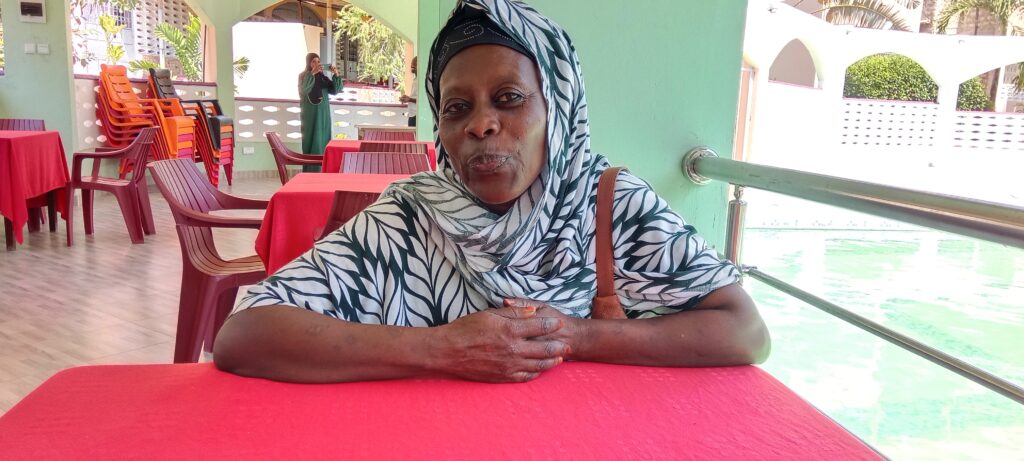
She believes women should move beyond being beneficiaries of fisheries activities and take a more active role in decision-making and ownership.
“We also have a role to play and need to be at the forefront,” she said, expressing the ambition of women eventually owning boats themselves.
Samira Musa of Wasini BMU, which is involved in coral and seagrass restoration, similarly emphasized the need for women to be at the forefront of implementing conservation projects through BMUs.
The communities’ concerns are unfolding within a broader push towards the blue economy.
Becha cautioned that the blue economy should not be reduced to fisheries. It encompasses tourism, marine transport, energy, oil and gas exploration and other activities.
This broader definition, he said, makes community participation even more important because different economic interests can compete for the same marine space.
“If oil or gas resources are discovered, for instance, the government could be tempted to prioritize them because of their potentially higher financial returns, even though thousands of coastal residents depend directly on fisheries.
“The experience has taught communities that advocacy cannot be an occasional reaction to a problem. It must be continuous, organized and evidence-based,” said Becha.
Knowledge as a conservation tool
Richard Bemaronda, Project Manager for the GEF SGP UNDP programme at CANCO, said 10 community groups and two NGOs are involved in the programme, including youth groups such as Mchongo CBO Vanga, which uses art to promote marine conservation, and Shimoni Turtle Watch, which focuses on sea turtle conservation.
He said the advocacy training is part of a broader series of engagements designed to strengthen community understanding of policy, environmental governance and rights.
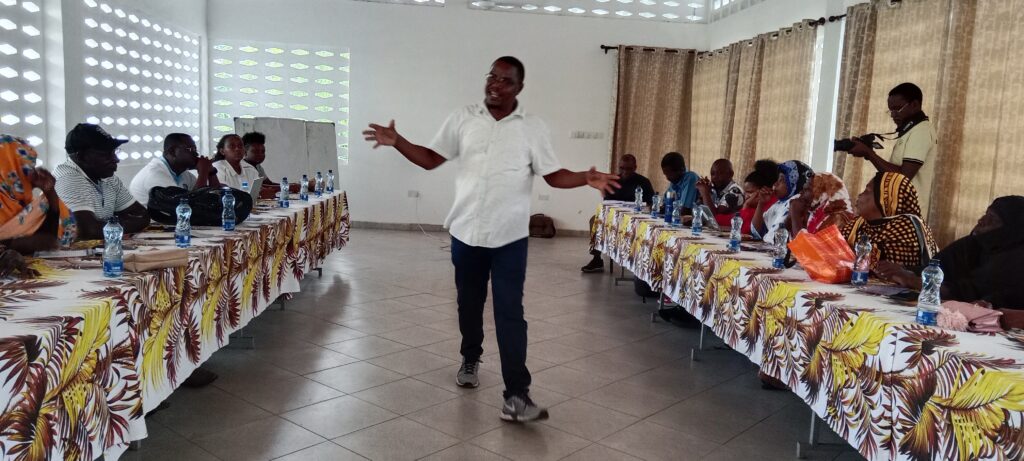
The first training was held in April 2026, with subsequent sessions building the capacity of communities to understand the laws that affect them and identify where to seek help when their rights or livelihoods are threatened.
“Advocacy is very important in fighting for rights with regard to environmental justice and human rights,” Bemaronda said.
The training has also exposed participants to international laws and conventions that can provide additional avenues for seeking redress when domestic mechanisms prove inadequate.